1. Navigating the Convergence: The End of Liquidity-Driven Complacency
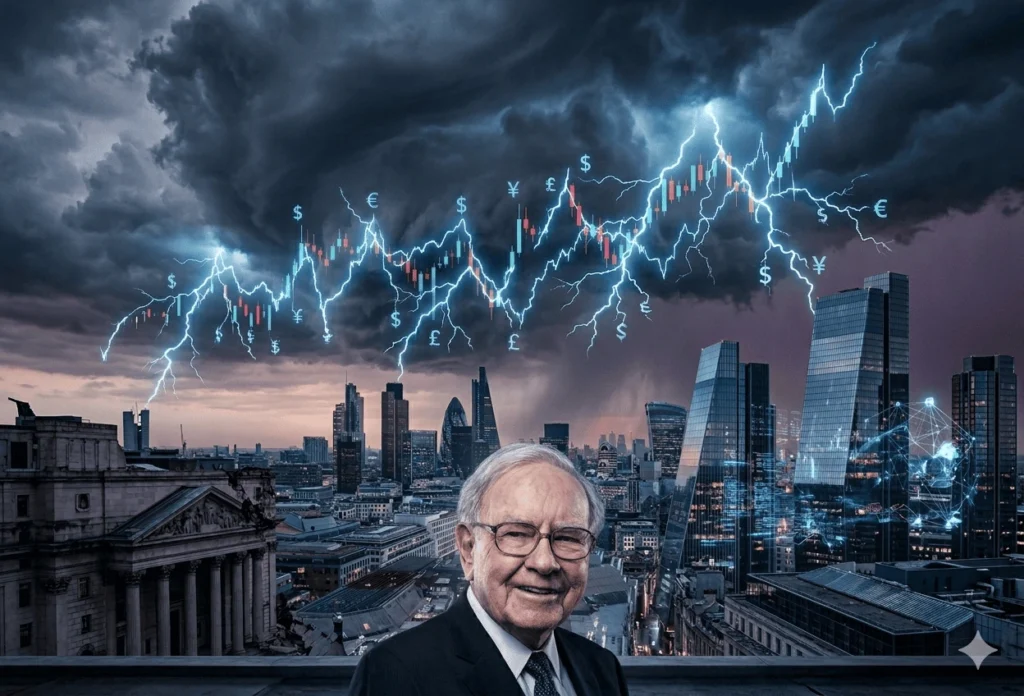
Why is 2026 the Year of the Financial “Reset”? The Guide to the New Market StormThe era of market complacency has ended. Within a volatile 48-hour window, the global economy hit a point of “forced transparency,” where the structural weaknesses of our energy strategy, fiscal policy, and shadow banking system were paraded in broad daylight. We are witnessing the simultaneous convergence of three systemic shocks: the mathematical failure of the largest strategic oil release in history, a Supreme Court-mandated tariff refund that creates a massive fiscal vacuum, and a liquidity freeze within the private credit market that is beginning to expose Wall Street’s skeletons. For the “financially savvy,” this is no longer about reactionary trading; it is about recognizing that the “perfect storm” has arrived, and the ripple effects will redefine winners and losers for the next decade.
2. Macro Analysis: The Three Pillars of the “Perfect Storm”
Pillar I: The Energy Paradox and Kinetic Reality
The market recently witnessed a profound defiance of monetary intervention. Despite a coordinated release of 400 million barrels of oil from strategic reserves—more than double the 180 million barrels released in 2022—oil prices surged 10% to approximately $110/barrel. This failure highlights a critical miscalculation: the government attempted a monetary solution for a kinetic problem. With the U.S. attack on Iran and the subsequent closure of the Strait of Hormuz, the “Geopolitical Risk Premium” has decoupled from supply-side “band-aids.” When 20 million barrels of daily flow are at risk, a release that covers only four days of global consumption is mathematically irrelevant.
Pillar II: The $150 Billion Fiscal Vacuum
A landmark judicial ruling following a Supreme Court decision has declared U.S. tariffs “unlawful from the moment they were imposed.” The government is now legally mandated to return over 150 billion** in collected revenue to importers. This is not merely a refund; it is an “interest trap.” The government is currently accruing **700 million in interest every single month these payments are delayed. Without a dedicated reserve for this liability, the U.S. Treasury faces a massive fiscal drain that will inevitably be offloaded onto the taxpayer, creating a long-term drag on national productivity.
Pillar III: The Shadow Banking Stress Test
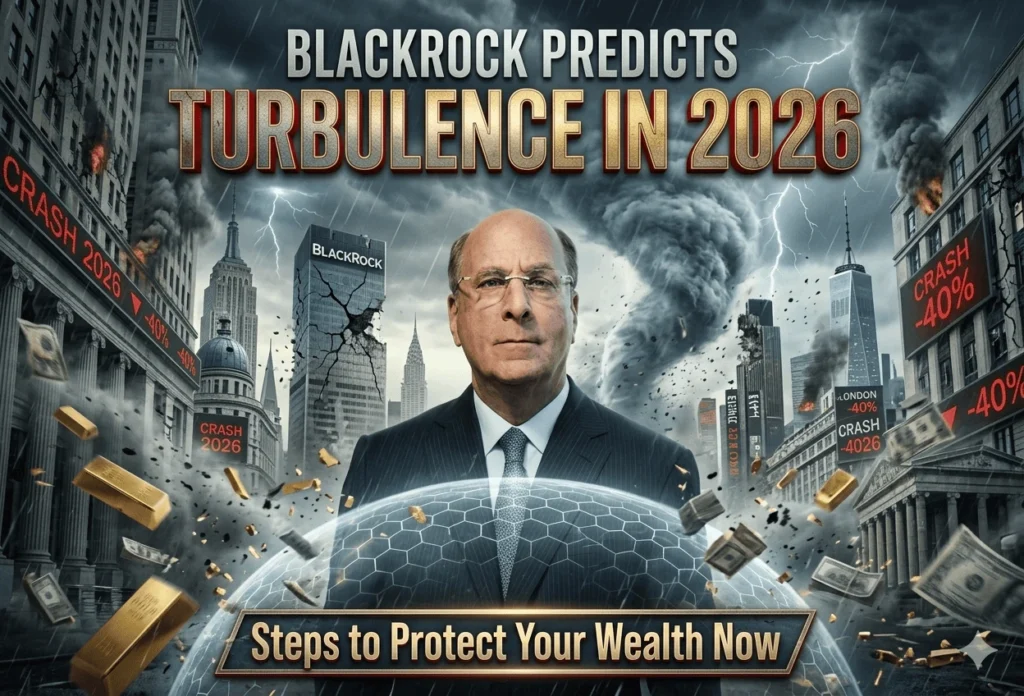
The private credit market, often called “shadow banking,” is facing its first existential crisis. As traditional institutions like Wells Fargo tightened lending standards, hedge funds stepped in to lend to high-risk businesses at steep premiums. However, IMF data reveals that 40% of these borrowers are “negative cash flow.” With sustained high interest rates, these businesses are defaulting en masse. This has forced giants like BlackRock and Morgan Stanley to “gate” their funds, blocking withdrawals to prevent a total systemic collapse. This is the “forced transparency” phase: investors are finding out that their “high-yield” assets are tethered to businesses that lose money every day.
Why is 2026 the Year of the Financial “Reset”
3. The “Big Nine”: Entities at the Epicenter
- BlackRock: As the world’s largest asset manager, BlackRock‘s decision to freeze private credit withdrawals signals a tier-one liquidity crisis, directly punishing its stock price as investors realize the “gating” mechanism is now active.
- Blackstone: An early mover in the liquidity freeze, Blackstone’s pause on withdrawals served as the “canary in the coal mine” for the broader private credit crunch.
- Morgan Stanley: Following the industry-wide contagion, Morgan Stanley recently blocked investor exits to prevent its private credit vehicles from collapsing under the weight of simultaneous redemption requests.
- Blue Owl: A specialist in the sector, Blue Owl’s participation in the withdrawal freeze confirms that the stress is not limited to diversified managers but is systemic across private credit specialists.
- Costco: A massive beneficiary of the tariff ruling, Costco stands to receive a significant cash influx as “unlawful” duties are returned with interest.
- Walmart: As a primary importer, Walmart‘s balance sheet will see a multi-billion-dollar tailwind from the government’s mandatory refund of tariff revenues.
- Target: The judicial mandate ensures that Target will recoup substantial previously paid duties, providing a one-time liquidity boost in a challenging retail environment.
- FedEx: Beyond direct refunds, FedEx stands to benefit as its major shipping clients regain capital, potentially stabilizing logistics volumes despite macro headwinds.
- Wells Fargo: While Wells Fargo and other traditional banks avoided these high-risk “shadow” loans directly, they remain the “lenders to the lenders.” Their exposure lies in the credit lines provided to the hedge funds now facing defaults, creating a dangerous secondary domino effect.
4. Analysis of Growth Potential and Risk Factors
Strategic Growth Opportunities
- One-Time Balance Sheet Windfalls: Major retailers (Costco, Walmart) will see a massive cash injection from the $150 billion refund. This provides capital for expansion or debt reduction.
- Distressed Asset Acquisition: The freeze in private credit will eventually force a liquidation of underlying assets. Savvy investors can wait for these “shadow” skeletons to be sold at cents on the dollar.
- Energy Sector Support: The failure of strategic releases proves that $110/barrel oil may be a new floor rather than a ceiling, supporting long-term valuations in domestic energy production.
Systemic Risk Factors
- The “Lender of Last Resort” Risk: If hedge funds cannot meet their obligations, the banks that funded them (Wells Fargo, etc.) face a credit contraction that could freeze traditional lending.
- Risk Note (Retail): While Walmart and Target receive a cash windfall, this is a one-time event. It does not fix fundamental margin compression if the “Invisible Tax” on consumers (inflation) continues to erode purchasing power.
- Taxpayer Insolvency: The 700 million** monthly interest payment is a fiscal black hole. Investors should anticipate future tax hikes or currency devaluation as the government scrambles to cover the **150 billion vacuum.
5. Detailed Breakdown: Why Strategic Reserves Failed
The recent intervention was a “4-day band-aid” on a kinetic wound. To understand why the market ignored the largest release in history, consider the scale:
- Historical Scale: The 400 million barrel release is more than double the 180 million released in 2022 during the Ukraine invasion.
- The Math of Defeat: Global consumption is 100 million barrels per day. The total release covers only four days of global demand.
- The Strait of Hormuz Factor: The closure of the Strait removes 20 million barrels per day from the market.
- The 20-Day Limit: The entire 400 million barrel strategic release only offsets the Strait’s closure for exactly 20 days.
By the time the math was settled, the market realized the government was “flying blind” with no further cards to play, leading directly to the 10% price surge.
Why is 2026 the Year of the Financial “Reset”
6. The “Invisible Tax”: Tariff Interest and the Taxpayer
The tariff refund ruling exposes a brutal cycle for the American public. Harvard Business School data confirms that while businesses absorbed 75% of the initial tariff costs, 25% was passed directly to consumers in the form of higher prices.
Now, the government must return 150 billion** plus **700 million in monthly interest. Since the government has no “tariff refund fund,” this capital must come from current taxpayer revenue. Effectively, the consumer paid once through higher prices at the shelf, and will now pay a second time to fund the interest-laden repayment to corporations. This is a classic “fiscal vacuum” that transfers wealth from the public sector to corporate balance sheets.
7. Investor FAQ: Navigating the Storm
1. Why did oil prices go up after the strategic release? The market recognized the math: 400 million barrels only covers 20 days of the deficit caused by the Strait of Hormuz closure. It was a monetary solution to a kinetic conflict.
2. Which companies are receiving the tariff refunds? Primary importers and logistics giants like Costco, Walmart, Target, and FedEx are the legal beneficiaries of the $150 billion mandate.
3. Is my money safe in private credit funds? Liquidity is no longer guaranteed. In a “gated” scenario like we see with BlackRock, your capital is essentially hostage to the fund’s ability to liquidate distressed, non-performing assets—a process that can take years in a high-rate environment.
4. What is the Strait of Hormuz, and why does it affect gas prices? It is a critical maritime “choke point.” The closure blocks 20 million barrels of oil per day, creating an immediate global shortage that no strategic reserve can fix.
5. How much interest is the US government paying on delayed tariff refunds? The “interest trap” is currently costing the government $700 million every single month.
6. Why did Morgan Stanley block withdrawals? To prevent a “run on the fund.” If too many investors pull capital at once while the underlying businesses are defaulting, the fund would collapse.
7. What percentage of private credit borrowers are losing money? According to the IMF, 40% of these borrowers are “negative cash flow,” meaning they are fundamentally insolvent without constant new lending.
8. How do higher oil prices impact grocery costs? At $110/barrel, the cost of fertilizer, production, and transportation spikes. These costs are invariably passed to the consumer.
9. What is the “domino effect” on Wall Street? It refers to the risk that hedge fund defaults will bleed back into the traditional banks that provide those funds with leverage and credit lines.
10. What happened to BlackRock’s stock during the withdrawal pause? The stock suffered as the market priced in the reputational and financial risks associated with “gating” investor capital.
8. Conclusion: From Panic to Opportunity
The “Perfect Storm” of 2024 is the final signal that the era of easy money and opaque risks is over. While the convergence of 110/barrel** oil, a **150 billion fiscal drain, and a private credit freeze presents systemic danger, these are the exact conditions where the “financially savvy” thrive.
Market pain creates the “forced transparency” required to identify where value has been mispriced. Whether it is the one-time cash windfalls for retail giants or the future opportunity to buy distressed credit at a discount, the disciplined investor looks for the ripple effects before they hit the shore. Do not panic—research. The opportunity is moving, and those who understand the math of this storm will be the ones to profit from the aftermath.
Disclaimer: All investing carries risk. This report is for informational and educational purposes only and does not constitute financial advice. Past performance is not indicative of future results. Always perform individual research or consult with a qualified financial advisor before making investment decisions.