
The Anatomy of Market Fear
The US-Iran War Will Make Sophisticated Investors, fear is a commodity; the financial media complex prioritizes engagement over equity preservation, but the sophisticated market participant buys the underlying assets that fear devalues. When geopolitical exogenous shocks—such as escalating military strikes between the United States and Iran—dominate the headlines, the masses succumb to a primitive emotional reaction. This instinctual urge to liquidate and “wait for the dust to settle” is a wealth-destroying behavior.
Institutional-grade investors operate within a rigorous logical framework. They recognize that while the crowd reacts to the noise of the news cycle, real capital appreciation is achieved by those who look past the immediate volatility. Building generational wealth is rarely about the speed of one’s reaction to the news; it is about the refusal to react emotionally and the discipline to execute a pre-determined capital allocation strategy when fear drives prices below intrinsic value.
The US-Iran War Will Make Sophisticated Investors
Macro Analysis: The Market as a Voting Machine vs. Weighing Machine
To successfully navigate wartime volatility, an investor must distinguish between price and value. This distinction is best summarized by the core principle of value investing:
“The stock market in the short term is a voting machine, driven by human emotion, popularity, and the prevailing narrative. In the long term, it is a weighing machine, driven by fundamental earnings, cash flow, and business utility.”
In the short term, the “voting machine” is never correctly calibrated. It overreacts to geopolitical tension with indiscriminate selling. However, the “weighing machine” eventually asserts itself, reflecting the actual productivity of resilient businesses.
The Buffett Indicator and the Illusion of “Cheaper”
Before deploying capital during a conflict-driven dip, one must analyze the starting valuation. The “Buffett Indicator” (Total Market Cap vs. GDP) serves as a vital barometer for current market health.
- Current Status: The market is currently positioned at over 120% overvalued.
- The Mean Reversion Risk: Historically, when the market exceeds a 50% overvaluation threshold, the average 10-year forward return (excluding dividends) has been negative.
- The House Metaphor: Consider a property with an intrinsic value of $500,000 that is listed for $5 million. If the price drops to $3 million during a market panic, it has become 40% cheaper, but it is still not cheap. Sophisticated investors do not confuse a price reduction with a bargain; they demand a margin of safety based on the “weighing machine” of actual value.
The US-Iran War Will Make Sophisticated Investors
Historical Resilience: 75 Years of War and Market Returns
History confirms that the American economy is a relentlessly upward-trending system, regardless of geopolitical strife. The S&P 500 has proven capable of absorbing massive shocks and continuing its trajectory of growth.
- Eisenhower / Korean War: Despite active military conflict on the Korean Peninsula, the market returned +142%.
- JFK & LBJ / Cuban Missile Crisis: In the face of potential nuclear annihilation in 1962, the S&P 500 gained over 40%.
- Nixon, Ford, & Carter / Vietnam: Despite Watergate, stagflation, and the fall of Saigon, the market recovered with gains of +38% under Ford and +28% under Carter.
- Reagan / Black Monday: Even with 18% mortgage rates and the 1987 crash, the market finished the term +109%.
- GHW Bush / Gulf War: Operation Desert Storm caused an oil spike and a short-term sell-off, yet the presidency returned +57%.
- Clinton / S&L Crisis & Dot-com Inception: The market saw an era of absolute insanity, returning +208%.
- W. Bush / 9/11 & The Great Recession: The S&P 500 finished -37%.
- Obama / Post-Crisis Recovery: Emerging from the 2008 collapse, the market returned +167%.
- Trump / COVID-19 Pandemic: Despite a global shutdown, the market finished the term +68%.
Analyst Note on Performance Variance: The significant decline during the W. Bush era was not caused by war alone; it was the result of extreme starting valuations (the Dot-com bubble) coupled with the structural failure of the housing market. This reinforces the “Buffett Indicator” logic: starting valuations dictate long-term equity risk premiums more than the headlines of the day.
The US-Iran War Will Make Sophisticated Investors
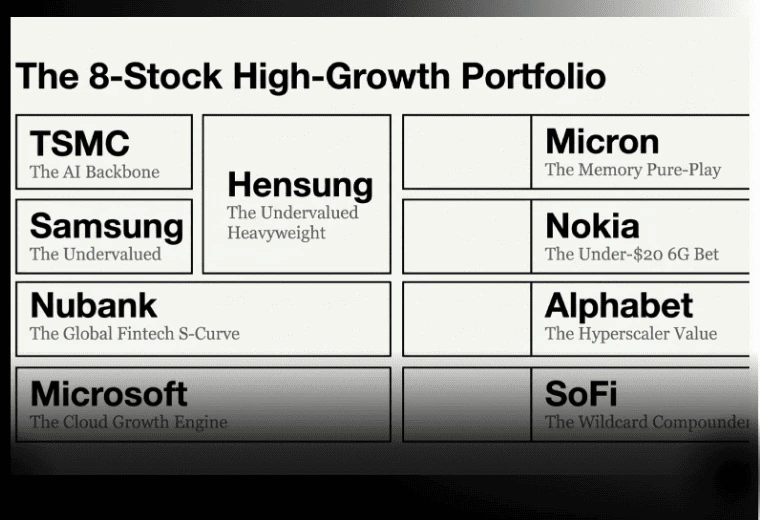
Sector Dominance: 8 Plays for Long-Term Capital Allocation
Conflict creates temporary dislocations that favor specific industries. Sophisticated market participants look for companies with “Network Effects” and “Economic Moats” that remain geographically agnostic over a 30-year horizon.
- Defense Contractors: Military escalation necessitates an immediate acceleration in the production of hardware, intelligence systems, and advanced technology.
- Commodity Volatility & Infrastructure: Energy and oil producers benefit from supply-chain anxiety and price spikes, capturing immediate revenue increases during Middle East tensions.
- Strategic Logistics: The necessity of moving military hardware and shifting global supply chains makes resilient logistics and transport networks indispensable.
- Ecosystem Tech Leaders (e.g., Apple): Geopolitical “blips” do not alter the long-term consumption of core digital ecosystems. These companies are agnostic to regional conflict over a 20-year cycle.
- Global Financial Processors (e.g., Visa): As “Network Effect” plays, these entities remain the fundamental transaction layer of the global economy, regardless of geopolitical shifts.
- Cash-Flow Generative Businesses: Companies that act as the “underlying engine of innovation” and produce high free cash flow are the primary vehicles for compounding wealth.
- Resilient U.S. Infrastructure: Investing in the broader American economy is a bet on a system that has survived world wars, depressions, and pandemics.
- Mean Reversion Assets: When the market “pendulum” eventually swings from overvalued to undervalued, the most profitable move is acquiring high-quality businesses that have been sold off indiscriminately due to macro fear.
The US-Iran War Will Make Sophisticated Investors
The Five Tenets of Principle-Driven Investing
To resist the “emotional investor” trap, one must adhere to these five strategic pillars:
- Investors vs. Speculators: We acquire ownership in businesses based on fundamentals, not gamblers betting on short-term price movements.
- Present Value of Future Cash Flows: The value of any asset is the sum of all future cash it will produce, discounted to today’s dollars.
- The Circle of Competence: If you cannot explain the business model and its revenue drivers, you have no business owning it.
- Voting vs. Weighing Machine: Recognize that sentiment drives the daily price, but earnings drive the decade-long return.
- Price vs. Story (The “Wrong Price” Rule): “Story” is the enemy of “Value.” A compelling narrative (e.g., “Defense stocks must rise!”) is irrelevant if you pay a price that ignores mean reversion.
The US-Iran War Will Make Sophisticated Investors
Strategy: How to Invest Right Now
| ETF/Index Investors | Individual Stock Investors |
| Maintain Dollar Cost Averaging (DCA): Consistency is the antidote to volatility. Do not stop contributions; the “dust” never truly settles until the opportunity is gone. | Conduct DCF Analysis: Determine the “Intrinsic Value” of a company by calculating the present value of future cash flows. Only buy when the price is significantly below this figure. |
| Ignore Market Timing: History shows that trying to time the “bottom” results in missing the most explosive days of the recovery. | Demand a Margin of Safety: Given the current 120% overvaluation, sophisticated investors must demand deep discounts to protect against the pendulum swinging back toward mean valuations. |
| Trust the System: A diversified ETF over a long horizon remains the most reliable tool for equity preservation and growth. | Avoid Headline Chasing: Do not buy because of an “Iran headline.” Buy because the “voting machine” has mispriced a high-quality “weighing machine” asset. |
The US-Iran War Will Make Sophisticated Investors
Investor FAQ: Navigating Geopolitical Volatility
- Should I sell my stocks if the US goes to war with Iran? No. Fear-based selling has historically cost investors more than the conflicts themselves.
- What is the Buffett Indicator saying about the market right now? It indicates a massive 120% overvaluation relative to GDP, signaling high risk for new capital.
- How did the S&P 500 perform during the Gulf War? Despite the initial shock, the market returned 57% during that presidential term.
- What happens to oil prices during Middle East tensions? They typically spike as speculators “vote” on supply-side risks.
- Is the market currently overvalued? Yes. Multiples are stretched, and the margin of safety is currently razor-thin for the broader indices.
- What is “Intrinsic Value”? The calculated worth of a business based on its long-term capacity to generate free cash flow, independent of market sentiment.
- Why do defense stocks rise during war? Because governments accelerate the procurement of equipment and military technology, boosting top-line revenue for contractors.
- What is the difference between a voting machine and a weighing machine? One is a short-term popularity contest (emotion); the other is a long-term measurement of business success (earnings).
- Should I wait for the “dust to settle” before buying? No. By the time the news feels “safe,” the market has typically already priced in the recovery.
- How does the American economy survive global shocks? The American economy is a collection of resilient businesses driven by innovation and productivity, not a monolithic political entity easily dismantled by exogenous shocks.
The US-Iran War Will Make Sophisticated Investors
Conclusion: Building Generational Wealth
Wars, scandals, and pandemics appear as existential threats in the present, but on a long-term financial chart, they are merely footnotes. Every past bear market is viewed in hindsight as an “opportunity,” while every future one is viewed as a “risk.” To build generational wealth, you must invert this perspective.
View the coming volatility as a potential opportunity of a lifetime. Preparation always precedes successful execution. By maintaining discipline, continuing your dollar-cost averaging, and only acquiring individual businesses when they offer a significant margin of safety, you position yourself to thrive while the emotional crowd is perpetually disappointed.