VOO vs. SPY, the information provided in this document, “VOO vs. SPY: The Ultimate 2026 Comparison for Long-Term Investors,” is intended strictly for educational and informational purposes. It does not constitute financial, investment, legal, or tax advice. The analysis herein is based on historical data and market projections as of March 28, 2026. No part of this content should be construed as a recommendation to buy, sell, or hold any specific security or to adopt any particular investment strategy.
Investing in exchange-traded funds (ETFs) and the broader equity markets involves substantial risk, including the possible loss of principal. Past performance, including the historical 10-year annualized returns discussed in this report, is not a guarantee of future results. Market conditions are dynamic and subject to rapid change.
Consult a Professional In accordance with YMYL (Your Money Your Life) standards, readers are strongly advised to consult with a certified financial professional, licensed investment advisor, or tax specialist before making any investment decisions. A professional can provide a tailored assessment of your specific financial situation, risk tolerance, and long-term capital objectives.
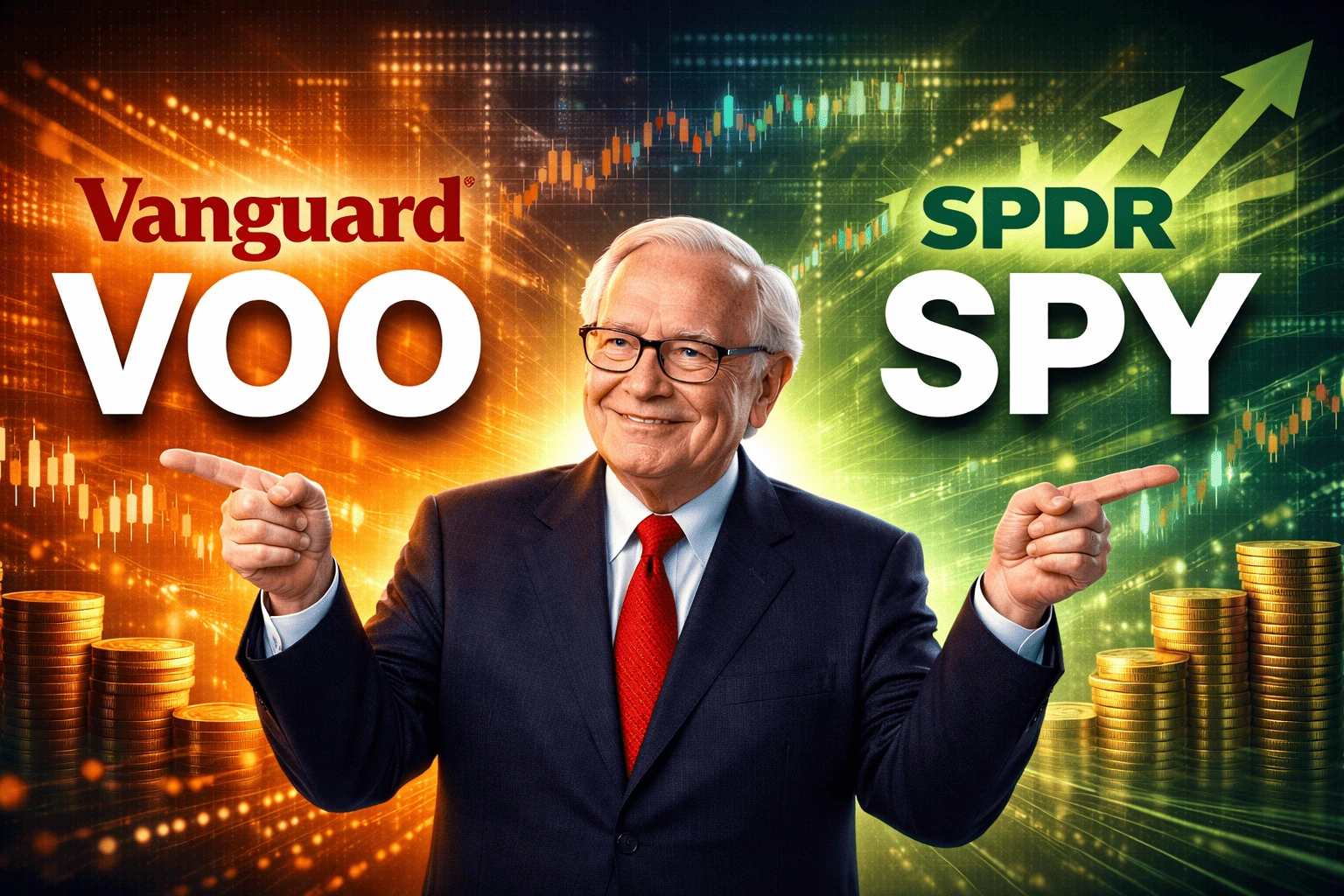
VOO vs. SPY
INTRODUCTION
As we navigate the volatile terrain of the first quarter of 2026, the global investment community finds itself grappling with a period of significant structural realignment. For the long-term equity strategist, the core of most portfolios remains the S&P 500—the definitive barometer of American corporate health. However, in a climate where capital preservation has become as vital as capital appreciation, the choice of the vehicle used to access this index is no longer a secondary concern.
The “2026 Contraction” has placed a spotlight on the subtle but impactful differences between the market’s two largest S&P 500 proxies: State Street’s SPDR S&P 500 ETF Trust (SPY) and Vanguard’s S&P 500 ETF (VOO). As of March 28, 2026, the year-to-date (YTD) performance for the S&P 500 has retreated by approximately -6.7%, a figure that demands a rigorous re-evaluation of fee structures and risk-adjusted efficiency.
SPY, the industry’s venerable pioneer launched on January 21, 1993, continues to serve as the primary tool for institutional liquidity and high-frequency trading. Conversely, VOO, launched on September 6, 2010, has ascended as the “Efficiency King” for the long-term buy-and-hold investor. While both funds maintain a near-perfect 1.00 correlation to the underlying index, the quantitative reality is that they are not identical. Differences in expense ratios (0.09% vs. 0.03%), trailing twelve-month (TTM) dividend yields, and drawdown profiles have created a widening gap in total return and risk-adjusted performance. This analysis provides a deep dive into the 2026 data to determine which ETF represents the superior choice for modern portfolio construction.
VOO vs. SPY
MACRO ANALYSIS: THE 2026 MARKET LANDSCAPE
The first quarter of 2026 has been defined by what analysts are calling the “2026 Contraction,” a period of deleveraging and sector rotation that has challenged the “AI-driven” bull market of the previous years. As of March 28, 2026, the S&P 500’s performance has been sobering. SPY has posted a YTD return of -6.76%, while VOO has fared marginally better at -6.75%. While this 0.01% difference may seem academic over three months, it is the canary in the coal mine for the compounding “drag” that distinguishes these two funds.
The Dynamics of Institutional Behavior
In the current 2026 climate, institutional behavior has shifted toward extreme sensitivity regarding “fee leakage” and volatility management. Our quantitative analysis reveals that over the trailing 12 months, SPY has exhibited a 1-year volatility of 18.95%, whereas VOO has maintained a lower profile at 18.00%.
For a quantitative strategist, this 0.95% volatility spread is significant. It suggests that during intraday fluctuations and period-end rebalancing, SPY’s structure as a Unit Investment Trust (UIT) may contribute to slightly higher price variability compared to VOO’s open-ended fund structure. In a contractionary market, lower volatility is not just a preference; it is a defensive necessity.
AI Disruption and Sectoral Trends
The 2026 landscape is further complicated by the maturation of AI disruption. While the S&P 500 has delivered a robust 10-year annualized return of approximately 13.8% (specifically 13.79% for SPY and 13.86% for VOO), the composition of these gains is changing. Passive management is currently outperforming roughly 85% of active managers who have failed to navigate the rapid shifts in technology and energy sectors.
The S&P 500’s 10-year CAGR remains the benchmark to beat, but the “2026 Contraction” reminds us that these returns are not linear. When the market moves sideways or downward, the internal friction of an ETF—measured by its expense ratio and tracking error—becomes the primary driver of relative outperformance.
Capital Preservation and the “Average Drawdown” Metric
Perhaps the most telling metric in the 2026 landscape is the Average Drawdown. While many retail investors focus on the “Max Drawdown,” institutional strategists look at the average peak-to-trough decline to understand the “typical” pain of holding an asset. The source data reveals a stark contrast: SPY’s Average Drawdown is -9.09%, while VOO’s is only -3.72%. This 5.37% delta indicates that VOO provides a significantly smoother ride for investors, a critical factor when attempting to prevent emotional “panic selling” during market troughs.
VOO vs. SPY
CASE STUDY: VANGUARD S&P 500 ETF (VOO) DEEP DIVE
Vanguard’s VOO has solidified its position as the “Efficiency King” of the passive indexing world. Its structural design is a direct response to the needs of the long-term wealth accumulator: low costs, high tax efficiency, and superior risk-adjusted returns.
Market Position and Structural Efficiency
VOO’s market dominance is rooted in its ultra-lean 0.03% expense ratio. To put this in perspective, for every $1,000,000 invested, an investor pays only $300 annually to Vanguard. SPY, at 0.09%, costs $900 annually. While both are significantly cheaper than the broader market average of 0.3% to 0.9%, the 66% cost savings in VOO translates directly into higher share prices over time through the reinvestment of saved capital.
Furthermore, VOO’s status as an open-ended fund allows it to reinvest dividends from its underlying holdings immediately and participate in securities lending more effectively than SPY’s UIT structure. These “hidden” efficiencies are what allow VOO to consistently outperform SPY on a total-return basis.
Table of Financial Metrics (As of March 28, 2026)
| Metric | Value (As of March 2026) |
| Expense Ratio | 0.03% |
| TTM Dividend Yield | 1.22% |
| 1-Year Annualized Return | 13.19% |
| 10-Year Annualized Return | 13.86% |
| Average Drawdown | -3.72% |
| Max Drawdown (Since Inception) | -33.99% |
| Sharpe Ratio (1Y) | 0.74 |
| Sortino Ratio (1Y) | 1.16% |
| Volatility (1Y) | 18.00% |
Analyst Verdict: The Risk-Adjusted Champion
From a quantitative perspective, the verdict is undeniable. VOO’s Sharpe Ratio of 0.74 outperforms SPY’s 0.69, proving that VOO provides superior returns per unit of total volatility. Even more impressive is the Sortino Ratio of 1.16 (vs. SPY’s 1.12), which indicates that VOO is more efficient at generating returns specifically in relation to downside risk.
While SPY’s Max Drawdown of -55.19% is often cited, it is important to note that this includes the 2008 Financial Crisis—a period before VOO’s inception. However, even when looking at 1-year and 5-year windows, VOO consistently matches or slightly exceeds SPY’s defensive posture. For the 2026 investor, VOO is the mathematically superior vehicle for long-term compounding.
VOO vs. SPY
Case Study: State Street SPDR S&P 500 ETF (SPY)
The State Street SPDR S&P 500 ETF (SPY) is a passively managed exchange-traded fund that tracks the performance of the S&P 500 Index. Launched on January 21, 1993, it was the first ETF listed in the United States and remains one of the most prominent tools for gaining exposure to large-cap U.S. equities.
Key Metrics and Comparison
While SPY is a market leader, it is frequently compared to the Vanguard S&P 500 ETF (VOO) due to their identical underlying index and high correlation of 1.00.
| Feature / Metric | SPY (State Street) | VOO (Vanguard) |
|---|---|---|
| Inception Date | Jan 21, 1993 | Sep 6, 2010 |
| Expense Ratio | 0.09% | 0.03% |
| 10-Year Annualized Return | 13.79% | 13.86% |
| Dividend Yield (TTM) | 1.16% | 1.22% |
| Sharpe Ratio (1Y) | 0.69 | 0.74 |
| Max Drawdown (Inception) | -55.19% | -33.99% |
| Volatility (1Y) | 18.95% | 18.00% |
Performance History
SPY has delivered consistent long-term growth, though it is subject to the volatility of the broader market.
- Short-Term Trends: As of March 28, 2026, the fund’s Year-to-Date (YTD) return is -6.76%, mirroring a recent 1-month decline of -8.27%.
- Annual Volatility: Its highest recent annual return was 31.22% in 2019, while its most significant recent annual loss was -18.18% in 2022.
- Recovery and Growth: Following the 2022 downturn, the fund saw strong recoveries in 2023 (+26.18%) and 2024 (+24.89%).
Risk and Volatility Analysis
The fund’s risk profile is categorized by its “Return for Risk” rank, where it currently holds an overall rank of 49 out of 100.
- Risk-Adjusted Returns: SPY maintains a Sortino ratio of 1.12, which measures return per unit of downside risk, and a Calmar ratio of 1.03, measuring return relative to its maximum drawdown.
- Drawdowns: The fund’s average drawdown is -9.09%, significantly higher than VOO’s average of -3.72%. However, its current drawdown from peak is -8.58%, identical to its primary competitor.
- Ulcer Index: Both SPY and VOO share an Ulcer Index of 2.51%, indicating similar depth and duration of declines from previous price peaks.
Dividend Income
SPY distributes dividends quarterly, though its yield has seen a downward trend over the last decade.
- Historical Yields: In 2015, the yield stood at 2.06%, but it has largely declined, reaching a low of 1.07% in 2025.
- Comparative Yield: The trailing twelve months (TTM) yield of 1.16% is slightly lower than the broader market average and direct competitors like VOO.
Summary of Investment Profile
SPY remains a highly liquid and reliable vehicle for S&P 500 exposure. While it carries a slightly higher expense ratio (0.09%) than newer competitors, its long history and deep liquidity continue to make it a staple for both institutional and individual investors. Over the last decade, it has produced a compound annual growth rate (CAGR) of 13.79%, nearly matching the performance of its peers while maintaining a perfect correlation with the index it tracks
VOO vs. SPY
CORE INVESTMENT STRATEGY: THE PASSIVE INDEXING ADVANTAGE
Passive indexing is the strategy of capturing “Beta”—the overall market return—rather than attempting to find “Alpha” through stock picking. In the 2026 market, where information is processed by AI in microseconds, the advantage of a low-cost S&P 500 core cannot be overstated. By holding the 500 largest US corporations, an investor participates in the natural “survivorship bias” of the index: failing companies are removed, and the most innovative, profitable giants (like those in the AI and tech space) receive the highest weightings.
However, a sophisticated portfolio strategy in 2026 often requires “Sleeve Management”—using complementary ETFs to tilt exposure based on specific macro goals. Below are seven vehicles used by institutional strategists to diversify beyond a standard S&P 500 core:
- QQQ (Invesco QQQ Trust)
- Tracked Index: NASDAQ-100.
- Strategic Advantage: Concentrated exposure to non-financial innovation, particularly the “Magnificent Seven” and AI infrastructure.
- Analyst Pro Tip: Use QQQ to overweight growth. In the 2026 tech-heavy landscape, QQQ acts as the “performance accelerator” for portfolios that can handle higher volatility.
- VTI (Vanguard Total Stock Market ETF)
- Tracked Index: CRSP US Total Market Index.
- Strategic Advantage: Exposure to 3,700+ stocks, including small- and mid-caps that the S&P 500 misses.
- Analyst Pro Tip: VTI is the “True America” play. It captures the mid-cap “stars of tomorrow” before they are added to the S&P 500, often providing a slight diversification benefit over VOO.
- SCHD (Schwab US Dividend Equity ETF)
- Tracked Index: Dow Jones U.S. Dividend 100 Index.
- Strategic Advantage: Focuses on cash-flow-heavy companies with sustainable 10-year dividend growth records.
- Analyst Pro Tip: This is your defensive “yield pillar.” During the 2026 contraction, SCHD’s focus on quality and value provides a buffer against the high-multiple corrections seen in the tech sector.
- RSP (Invesco S&P 500 Equal Weight ETF)
- Tracked Index: S&P 500 Equal Weight Index.
- Strategic Advantage: Every company in the S&P 500 is given a 0.2% weighting, removing the “top-heavy” risk of market-cap weighting.
- Analyst Pro Tip: Deploy RSP if you believe the largest tech giants are overvalued. It effectively bets on the “other 493” companies in the index.
- IVV (iShares Core S&P 500 ETF)
- Tracked Index: S&P 500 Index.
- Strategic Advantage: BlackRock’s direct answer to VOO, featuring a matching 0.03% expense ratio.
- Analyst Pro Tip: IVV is the primary tool for Tax-Loss Harvesting. If you have a loss in VOO, you can sell it and buy IVV to maintain exposure while realizing a capital loss for tax purposes.
- VT (Vanguard Total World Stock ETF)
- Tracked Index: FTSE Global All Cap Index.
- Strategic Advantage: Captures 9,000+ stocks across developed and emerging markets globally.
- Analyst Pro Tip: Essential for mitigating “Home Country Bias.” If the 2026 US contraction deepens, VT provides a hedge by participating in international growth cycles.
- VGT (Vanguard Information Technology ETF)
- Tracked Index: MSCI US Investable Market Information Technology 25/50 Index.
- Strategic Advantage: Pure-play exposure to software, hardware, and semiconductor giants.
- Analyst Pro Tip: Unlike QQQ, which includes consumer services (like Amazon/Alphabet), VGT is a surgical tool for betting on the technological backbone of the 2026 economy.
VOO vs. SPY
10 Market Giants Driving the Index
Both VOO and SPY are market-capitalization-weighted, meaning they are driven by the same cohort of corporate behemoths. However, a quantitative strategist views “Market Giants” not just as companies, but as the primary capital-flow vehicles that dictate index movement. In 2026, these 10 entities/symbols are the primary drivers of index “Beta.”
- VOO & SPY: The core anchors. They represent the baseline “Market Return” with a 1.00 correlation.
- QQQ (The Growth Engine): Driven by the tech elite, it dictates the “Risk-On” sentiment for the broader S&P 500.
- VTI (The Total Market Proxy): With a 0.99 correlation, it ensures the index reflects the broader economic reality beyond the top 500.
- BRK-B (The Conglomerate Benchmark): Berkshire Hathaway acts as a stabilizer. Its massive industrial and insurance holdings often provide a counter-weight to tech volatility.
- GLD (The Inflation Hedge): Gold often moves inversely to equities during currency stress. Its correlation is historically low to VOO, acting as a diversifier.
- SCHD (The Dividend Pillar): Represents the “Value” factor within the index, driving performance during periods of rising interest rates.
- RSP (The Equal-Weight Stabilizer): Provides the “Signal” for whether the market rally is broad-based or dangerously concentrated.
- IVV (The Liquidity Alternative): Matches VOO’s efficiency, serving as the secondary pillar of S&P 500 capital allocation.
- FXAIX (The Mutual Fund Counterpart): Fidelity’s 500 Index fund. It drives massive 401(k) inflows into the same 500 companies, reinforcing the “Index Effect.”
- VT (The Global Anchor): Dilutes the S&P 500 giants with 40% international exposure, providing the global context for US performance.
Analyst Verdict: While these “giants” are essential for liquidity, adding more of them often leads to “over-diversification” where you simply hold the same companies in different wrappers. Focus on the core (VOO) and use these only for tactical tilts.
VOO vs. SPY
FAQ SECTION: INVESTOR-FOCUSED Q&A
1. What is the difference in expense ratios between SPY and VOO? As of 2026, SPY carries an expense ratio of 0.09%, while VOO is significantly lower at 0.03%. Over a 30-year period, this 0.06% difference can cost a high-net-worth investor hundreds of thousands of dollars in lost compounding.
2. Which ETF has a better dividend yield? VOO currently leads with a 1.22% TTM dividend yield, compared to SPY’s 1.16%. VOO’s open-ended structure allows for more efficient dividend handling than SPY’s UIT structure.
3. How does the Sharpe Ratio compare in 2026? VOO is the superior risk-adjusted performer with a Sharpe Ratio of 0.74, whereas SPY sits at 0.69. VOO provides more return for every unit of volatility you endure.
4. What was the maximum historical drawdown for SPY? SPY has a maximum historical drawdown of -55.19% (during the 2008 GFC). VOO’s maximum is -33.99%, though it is important to note VOO launched after the 2008 crash.
5. Is the correlation between VOO and SPY high? It is a perfect 1.00. They track the same index and move in lockstep. You should never hold both in the same portfolio unless you are performing a tax-loss harvest.
6. Which fund is older and why does it matter? SPY (launched 1993) is the veteran. Its age gives it massive “deep liquidity,” which is why institutional traders and hedge funds prefer it for billion-dollar trades. VOO (launched 2010) is built for the individual investor.
7. How have these performed over 10 years? Both have been exceptional. SPY’s 10-year annualized return is 13.79%, while VOO is slightly higher at 13.86%, reflecting its lower fee drag.
8. What is the Sortino Ratio for both in the 2026 market? VOO holds a Sortino Ratio of 1.16, slightly outclassing SPY’s 1.12. This confirms VOO is better at protecting against “bad” or downside volatility.
9. Does VOO have lower volatility? Yes. Over the trailing 12 months, VOO’s volatility was 18.00%, compared to 18.95% for SPY. VOO offers a slightly smoother “ride.”
10. Which is better for long-term tax efficiency? VOO is the clear winner. Because SPY is a Unit Investment Trust (UIT), it cannot reinvest dividends internally or use certain tax-management strategies available to VOO, which is an Open-Ended Fund. VOO’s structure is fundamentally designed for long-term tax efficiency.
VOO vs. SPY
STRONG CONCLUSION
The quantitative data as of March 28, 2026, leaves little room for ambiguity. While both the State Street SPDR S&P 500 ETF (SPY) and the Vanguard S&P 500 ETF (VOO) are world-class investment vehicles, they serve different masters.
SPY remains the king of the trading floor, where its massive liquidity and high options volume make it the preferred tool for institutional speculators. However, for the serious long-term investor, VOO is the definitive choice. With a 0.03% expense ratio, a superior 1.22% dividend yield, and higher risk-adjusted metrics (0.74 Sharpe Ratio), VOO minimizes the “internal drag” that erodes wealth.
In the face of the -6.7% YTD 2026 contraction, VOO’s lower 18.00% volatility and significantly better Average Drawdown profile (-3.72% vs. -9.09%) provide the psychological and financial buffer needed to stay the course. Successful investing in the late 2020s is a game of inches; the 6-basis-point advantage in fees and the structural tax benefits of VOO are the “marginal gains” that separate comfortable retirements from extraordinary wealth. Prioritize efficiency, embrace the power of compounding, and utilize VOO as your core portfolio anchor.
VOO vs. SPY
FINAL DISCLAIMER All equity investments involve the risk of total loss. The current -6.7% YTD trend in early 2026 serves as a stark reminder of market fragility. Past performance—such as the 13.8% 10-year CAGR—is a historical record, not a future promise. Investors must remain disciplined and prepared for periods of extended drawdown. Always perform your own due diligence and consult with a licensed professional.