ETF Strategy 2026, this document is provided for educational and informational purposes only and does not constitute financial, investment, tax, or legal advice. The content herein is designed to provide institutional-grade insights into investment metrics and should not be viewed as a recommendation to buy or sell any specific security.
Investing in the financial markets, including Exchange-Traded Funds (ETFs), involves substantial risk, including the potential loss of principal. Past performance—specifically the historical data of the funds mentioned in this report—is not a guarantee of future results. Market conditions are subject to rapid change, and strategies that have historically been effective may fail in future economic environments.
The author is not a certified financial planner or a fiduciary. Because every investor’s financial situation, risk tolerance, and time horizon are unique, you are strongly advised to consult with a licensed financial professional before making any capital allocation decisions. The reader assumes all responsibility for any actions taken based on the information contained in this analysis.
ETF Strategy 2026
INTRODUCTION: THE SILENT WEALTH ERODER
In the world of high-stakes chemistry and illicit enterprise, Walter White—the protagonist of the series Breaking Bad—was a master of efficiency and risk management. Now, imagine a scenario where a reformed Walter White seeks to transition his capital into a legitimate, long-term legacy for his family. He decides to move away from the volatility of his former life and places $200,000 into the stock market. For an investor like White, who understands the importance of “purity” in a product, Exchange-Traded Funds (ETFs) appear to be the logical choice—a clean, sensible vehicle to capture market growth while mitigating individual stock risk.
ETF Strategy 2026
However, even a brilliant analytical mind can fall victim to a structural flaw that has nothing to do with market crashes or bad timing. This flaw is often invisible on a monthly statement and masquerades as a standard cost of doing business. As a Senior Financial Analyst, I have seen this error compromise the solvency of both retail and institutional-grade portfolios.
The error is the High Expense Ratio.
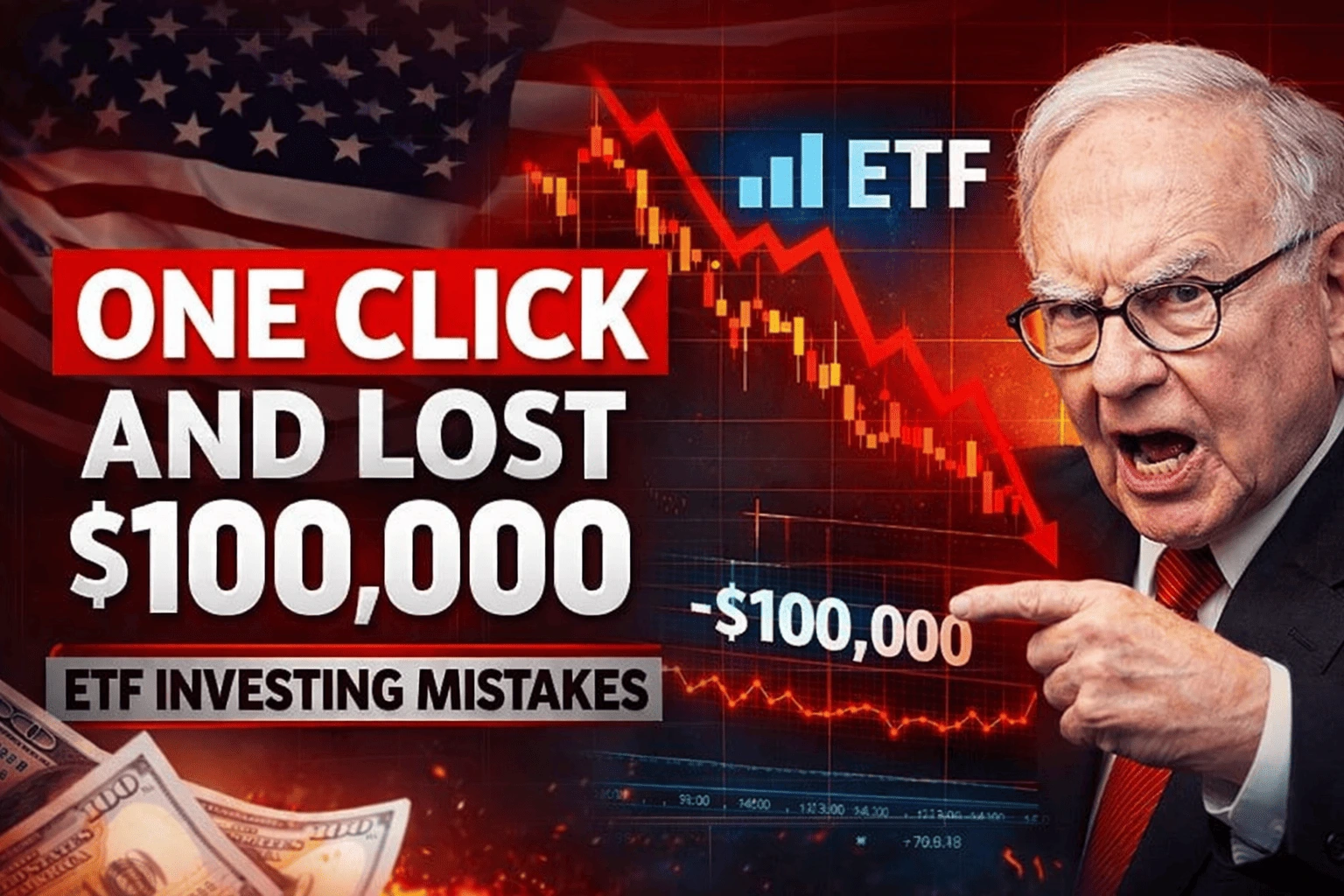
Key Problem: Expense ratios are not charged against your profits; they are charged against the total value of your investment. A seemingly minor 1% fee, when compared to a 0.05% fee, creates a divergent path in wealth accumulation that results in a massive capital shortfall. Over a 15-year horizon, this “fee drag” can strip over $100,000 from an investor’s pocket, effectively transferring that wealth to fund managers rather than the investor’s family.
The Geometry of Wealth Destruction
To understand the magnitude of this mistake, we must look at the mathematical compounding of fees. When capital is diverted to pay for high management costs, that capital is no longer available to compound in the following year. This creates a “double-loss” effect: the loss of the fee itself and the loss of the future growth that fee would have generated.
Case Study: The $200,000 Portfolio Comparison Assumes a 10% annual gross market return over 15 years.
| Time Interval | Fund A (1.00% Fee / 9% Net) | Fund B (0.05% Fee / 9.95% Net) | The “Fee Gap” (Wealth Lost) |
| Year 0 | $200,000 | $200,000 | $0 |
| Year 5 | $307,724 | $321,373 | $13,649 |
| Year 10 | $473,472 | $516,357 | $42,885 |
| Year 15 | $730,000 (Approx.) | $835,000 (Approx.) | $105,000+ |
This data illustrates that “better timing” or “picking a winner” was not required to gain an extra $100,000. The investor simply had to minimize the systemic leakage of capital. For 2026, the primary goal for any sophisticated investor is to ensure they are the primary beneficiary of their own risk-taking.
ETF Strategy 2026
MACRO ANALYSIS: THE SHIFT TOWARD EFFICIENCY
The macroeconomic environment leading into 2026 is undergoing a paradigm shift. We are moving away from an era of “persuasion-based” finance toward an era of “efficiency-based” capital migration. In previous decades, financial media and brokerage houses relied on the ability to persuade investors to purchase high-fee, actively managed products. These “persuasion assets” often carried expense ratios of 1.00% or higher, justified by the promise of market-beating performance that rarely materialized after fees.
Capital Migration and Expense Ratio Sensitivity
As market participants become increasingly data-literate, there is a clear macro trend toward “Expense Ratio Sensitivity.” Institutional and retail capital is flowing out of high-cost funds and into low-cost index-tracking vehicles. This is a survival mechanism. In a landscape defined by heightened interest rate sensitivity and tightening corporate margins, every basis point (0.01%) of an expense ratio acts as a headwind.
When the broad market faces volatility, a 1% management fee is a guaranteed loss, regardless of whether the market moves up or down. Sophisticated investors are recognizing that while they cannot control market returns, they can control the “cost of carry” for their investments.
The Media as a Macro Force
We must also analyze the role of the 24-hour news cycle. There is a fundamental distinction between media outlets that inform and those that persuade.
- Informing Outlets: Provide raw metrics, historical data, and repeatable principles.
- Persuading Outlets: Rely on traffic and engagement, often using dramatic forecasts or “once-in-a-lifetime” opportunities to trigger emotional responses.
The incentive structure for many media platforms is tied to advertising revenue (views) rather than investor outcomes. This leads to the promotion of “fragile or speculative assets”—high-yield funds or thematic ETFs that sound compelling in a headline but suffer from structural inefficiencies. To succeed in 2026, an investor must treat financial media as an input for raw data, not as an instruction manual for capital allocation.
ETF Strategy 2026
CASE STUDY: THE HIGH-YIELD DECEPTION (JNK & HYG)
A common psychological trap in behavioral finance is the “Dividend Yield Fixation.” Investors, particularly those seeking passive income, are often mesmerized by high distribution percentages while remaining blind to the erosion of the underlying principal. To analyze this “Yield Trap,” we look at two flagship high-yield bond ETFs: the SPDR Bloomberg High Yield Bond ETF (JNK) and the iShares iBoxx High Yield Corporate Bond ETF (HYG).
Analyst Breakdown: Yield vs. Total Return Impact
| Metric | JNK (SPDR Bloomberg High Yield) | HYG (iShares iBoxx High Yield) |
| Current Yield | ~6.5% | ~5.7% |
| Expense Ratio | 0.40% | 0.50% |
| Performance Since Inception | Down >30% | Down ~23% |
| Yield-to-Loss Ratio | Negative Net Expectancy | Stagnation Signal |
| Primary Risk Factor | Interest Rate Sensitivity | High-Debt Corporate Fragility |
The “Lessons Learned” Case Study
Even seasoned analysts are not immune to these traps. Early in my career—as highlighted in my own personal investment history—I found myself seduced by the “emotional pull” of quarterly dividends. Seeing cash land in an account feels like progress, but it is a distraction from the fundamental health of the asset.
Take a $100,000 investment in JNK. A 6.5% yield suggests an annual cash flow of $6,500. However, if the principal value of that $100,000 drops by 30% over the holding period, the investor is left with a portfolio worth $70,000. The accumulated dividends do not compensate for the $30,000 loss in asset value.
Why these assets struggle: High yields are frequently a byproduct of stagnation or distress. The companies within these funds often carry significant debt loads and have tighter margins. They are the first to feel the pressure of rising interest rates. As the share price of the ETF drifts lower due to the poor performance of the underlying companies, the “yield” may actually appear to increase (as a percentage of a lower price), creating a deceptive signal of value. As a result, the investor loses significantly more in principal than they gain in distributions.
ETF Strategy 2026
CORE INVESTMENT STRATEGY: THE LOW-COST REVOLUTION
The objective of an institutional-grade strategy is the minimization of “Tax Drag” and “Fee Drag.” This is achieved by adhering to a strict vetting process for every asset in the portfolio.
The Money Cheat Sheet Methodology
The “Money Cheat Sheet” logic focuses on side-by-side fund comparisons to spot structural differences before capital is committed. The goal is to audit current holdings to ensure they meet the “0.10% Threshold.”
The Methodology of the Audit:
- Metric Isolation: Look past the name of the fund and isolate the Expense Ratio, Dividend Yield, and Long-Term Performance (Since Inception).
- Side-by-Side Comparison: Compare the fund against a low-cost broad market alternative (e.g., an S&P 500 ETF with a 0.03% fee).
- Net Return Projection: Calculate the return after fees over a 10-to-15-year period.
The Three Pillars of Asset Selection
For long-term growth, capital should be concentrated in three core ETF categories that prioritize asset growth over speculative yield:
- S&P 500 ETFs: These serve as the foundation of a risk-mitigated allocation. They utilize a “self-cleansing” mechanism where underperforming companies are automatically rotated out and replaced by growing entities.
- Tech and Growth ETFs: These capture the innovation-driven sectors of the economy. While they may have higher volatility, their focus is on price appreciation and margin expansion.
- Dividend-Growth ETFs: The focus here is not on the highest yield, but on dividend behavior. You are looking for companies that have the cash flow to pay dividends while their share price continues to appreciate.
Analyst Pro Tip: Treat dividend yields as secondary to price appreciation. If the underlying asset is not growing, the dividend is simply a return of your capital rather than a return on your capital.
ETF Strategy 2026
10 MARKET GIANTS DRIVING THE INDEX
The stability and growth of the most efficient ETFs are driven by the “Market Giants”—the large-cap entities that dominate the S&P 500. These are not speculative bets; they are the structural pillars of the global economy.
Attributes of the Market Giants
- Pricing Power and Moats: These companies possess the ability to maintain or increase profit margins even in inflationary environments. Unlike the “fragile assets” found in high-yield bond funds, these giants have the scale to withstand economic tightening.
- Capital Expenditure Efficiency: These entities have massive cash reserves and the ability to reinvest in their own growth without relying on high-interest debt.
- Resilience to Interest Rate Volatility: Because of their strong balance sheets, these giants are significantly less sensitive to interest rate hikes than the high-debt companies that populate JNK or HYG.
The “Paint Drying” Philosophy
Economist Paul Samuelson famously stated that “investing should be more like watching paint dry.” The Market Giants provide this exact style of growth. They do not offer the “excitement” of a speculative headline, but they provide the “self-cleansing” compounding that builds $100,000 differences in portfolio value. By focusing on indices dominated by these giants, investors capture the broad upward trajectory of human innovation and economic expansion without paying for “active” management that consistently underperforms.
When you invest in these “Market Giants,” you aren’t betting on a single company; you are buying the entire growth engine of the global economy. In 2026, these 10 ETFs represent the gold standard for liquidity, diversification, and long-term wealth:
1. Vanguard S&P 500 ETF ($VOO) The gold standard for low-cost investing. With an expense ratio of just 0.03%, VOO captures the 500 largest U.S. companies, offering the ultimate “paint drying” experience for wealth accumulation.
2. iShares Core S&P 500 ETF ($IVV) A direct rival to VOO, this BlackRock giant is a favorite for institutional investors and retirees alike due to its massive liquidity and rock-bottom fees.
3. Vanguard Total Stock Market ETF ($VTI) For those who want everything. VTI holds over 3,700 stocks, from the 10 market giants down to small-cap innovators, ensuring you never miss a breakout success.
4. Invesco QQQ Trust ($QQQ) The powerhouse of the AI super-cycle. QQQ tracks the Nasdaq-100, giving you heavy exposure to the tech leaders like Microsoft and Nvidia that are redefining the 2026 economy.
5. Schwab US Dividend Equity ETF ($SCHD) The “Income King.” Focused on high-quality companies with sustainable dividend growth, SCHD is the backbone of any passive income blueprint.
6. Vanguard Total International Stock ETF ($VXUS) True global diversification. VXUS provides exposure to non-U.S. markets, capturing growth in Europe, Asia, and emerging economies to hedge against a domestic-only slowdown.
7. iShares Core MSCI EAFE ETF ($IEFA) Focused on developed markets outside of North America, this ETF is essential for investors seeking stability through international giants like ASML, Nestlé, and Toyota.
8. Vanguard Growth ETF ($VUG) A concentrated bet on expansion. VUG filters the market for companies with the strongest revenue and earnings growth, perfect for those with a longer time horizon.
9. JPMorgan Nasdaq Equity Premium Income ETF ($JEPQ) The modern yield leader. By using an options-overlay strategy on the Nasdaq-100, JEPQ delivers high monthly income, making it a favorite for 2026 retirement strategies.
10. NEOS S&P 500 High Income ETF ($SPYI) A tax-efficient powerhouse. SPYI uses a sophisticated call-option strategy to generate double-digit yields while still participating in the S&P 500’s upside—ideal for the current “higher-for-longer” rate environment.
ETF Strategy 2026
FAQ: ESSENTIAL INVESTOR KNOWLEDGE
1. How much can an ETF expense ratio really cost me?
The cost of a high expense ratio is found in the “opportunity cost” of lost compounding. On a $200,000 investment with a 10% gross return over 15 years, a 1% fee results in a final balance of approximately $730,000. Conversely, a 0.05% fee results in approximately $835,000. This is a $105,000 difference that requires no extra risk or better market timing—it is simply a result of fee efficiency. Over a full career of 30 years, this difference can escalate into the millions.
2. What is a “good” expense ratio?
In the current market, “good” is increasingly defined as anything below 0.10%. While the industry average for many funds used to be 0.50% to 1.00%, the most efficient broad-market ETFs now charge between 0.03% and 0.07%. If you are paying more than 0.50% for a standard index-tracking fund, you are likely suffering from an unnecessary “fee drag” that will significantly impact your long-term solvency.
3. Why is a high dividend yield potentially dangerous?
A high dividend yield is often a “yield trap.” This occurs when a company’s share price drops significantly due to poor performance, high debt, or falling margins. Since the yield is a percentage of the share price, the yield looks “higher” as the company fails. For example, JNK and HYG offer yields between 5.7% and 6.5%, yet their total principal value has declined by 23% to 30% since inception. The dividends you receive are often just small reimbursements for the massive losses in your principal.
4. What is the difference between an informing vs. persuading media outlet?
The distinction lies in the incentive structure. “Persuading” outlets often operate on an advertising-revenue model where success is measured by “clicks” and “engagement.” This creates a bias toward dramatic, emotional headlines and “once-in-a-lifetime” opportunities that trigger a “Fear Of Missing Out” (FOMO). “Informing” outlets focus on raw data, historical metrics, and repeatable principles. They don’t try to sell you a conclusion; they provide the tools for you to reach your own based on the numbers.
5. How do I verify a financial headline?
Always apply a layer of professional skepticism. Trace any claim back to its original source—be it a fund prospectus, an SEC filing, or an original data set. In many cases, you will find that a sensationalist headline (e.g., “This ETF will triple!”) is based on a single, modest statistic that has been stripped of its context. Use platforms like Yahoo Finance or CNBC to gather raw metrics, but never use their “narrative” as a primary reason for a trade.
6. Is it better to focus on yield or asset growth?
Long-term wealth is built through asset growth. You can achieve all your financial goals by focusing solely on growth-oriented, low-fee ETFs. However, it is almost impossible to succeed by focusing solely on yield, as yield-heavy funds often lack the price appreciation necessary to stay ahead of inflation and fee drag. Treat yield as a “secondary” benefit that should only be accepted if the underlying asset is also growing.
7. What is the “Walter White” investment scenario?
The Walter White scenario is a cautionary tale of “The $100,000 Mistake.” It describes a $200,000 investment that averages a 10% gross annual return. If the investor chooses a fund with a 1% expense ratio, they end up with $730,000 after 15 years. If they had chosen a fund with a 0.05% ratio, they would have $835,000. It highlights that an investor can do everything right—save money, pick a good market, and wait—yet still lose a massive fortune to invisible fees.
8. How do fees impact my total return over 15 years?
Fees are a “guaranteed negative return.” Unlike market volatility, which can be positive or negative, fees are always negative. Because they are calculated based on the total value of the account, as your wealth grows, the absolute dollar amount you pay in fees increases. This creates a “geometric drag” where the most expensive years for fees are the years when your account is at its largest, right before you need to access the capital.
9. Why do some ETFs lose value while paying dividends?
This is usually a result of “Capital Erosion.” The companies within the ETF are not growing their business; they are struggling with debt or declining margins. They continue to pay dividends to keep investors interested, but their share price continues to fall because the market recognizes the lack of growth. This is the definition of a “stagnant asset.” You are essentially being paid with your own money while the core value of the investment shrinks.
10. What is the best way to compare ETFs?
The gold standard is the “Side-by-Side Metric Comparison.” Do not look at the marketing materials. Instead, look at the “Expense Ratio,” “Dividend Yield,” and “Price Performance Since Inception” for two or three competing funds. By looking at these numbers together, the “Total Picture” becomes clear. If one fund has a higher yield but a much worse long-term price chart and a higher fee, the choice is mathematically obvious.
ETF Strategy 2026
CONCLUSION: THE PATH TO COMPOUND WEALTH
The path to building a legacy that would make even a meticulous strategist like Walter White proud is not found in high-yield bond traps or “exciting” media headlines. It is found in the disciplined, almost boring application of mathematical efficiency.
To ensure your portfolio is optimized for 2026, you must adhere to the Three Pillars of ETF Vetting:
- Minimize the Expense Ratio: Treat every basis point as a threat to your future. Stay as close to 0.10% as possible.
- Evaluate Total Return: Never look at yield in isolation. Ensure the asset is appreciating in value alongside any distributions.
- Prioritize Quality Growth: Focus on broad indices and “Market Giants” that offer self-cleansing mechanisms and margin resilience.
Wealth is built by minimizing what you give away to the financial industry and maximizing what you keep for yourself. If your investment strategy feels like “watching paint dry,” you are likely on the right track. Go directly to the data, ignore the persuasion, and let the math of compounding work in your favor.
ETF Strategy 2026
FINAL DISCLAIMER
All investment involves the risk of loss. The analysis of JNK and HYG provided in this document is based on historical data; past performance does not guarantee future results. Market dynamics, interest rate environments, and corporate stability can change without notice. Always conduct your own thorough due diligence and consult with a certified financial professional before making any investment decisions. The risk of substantial loss in trading and investing is real and should be managed with caution.