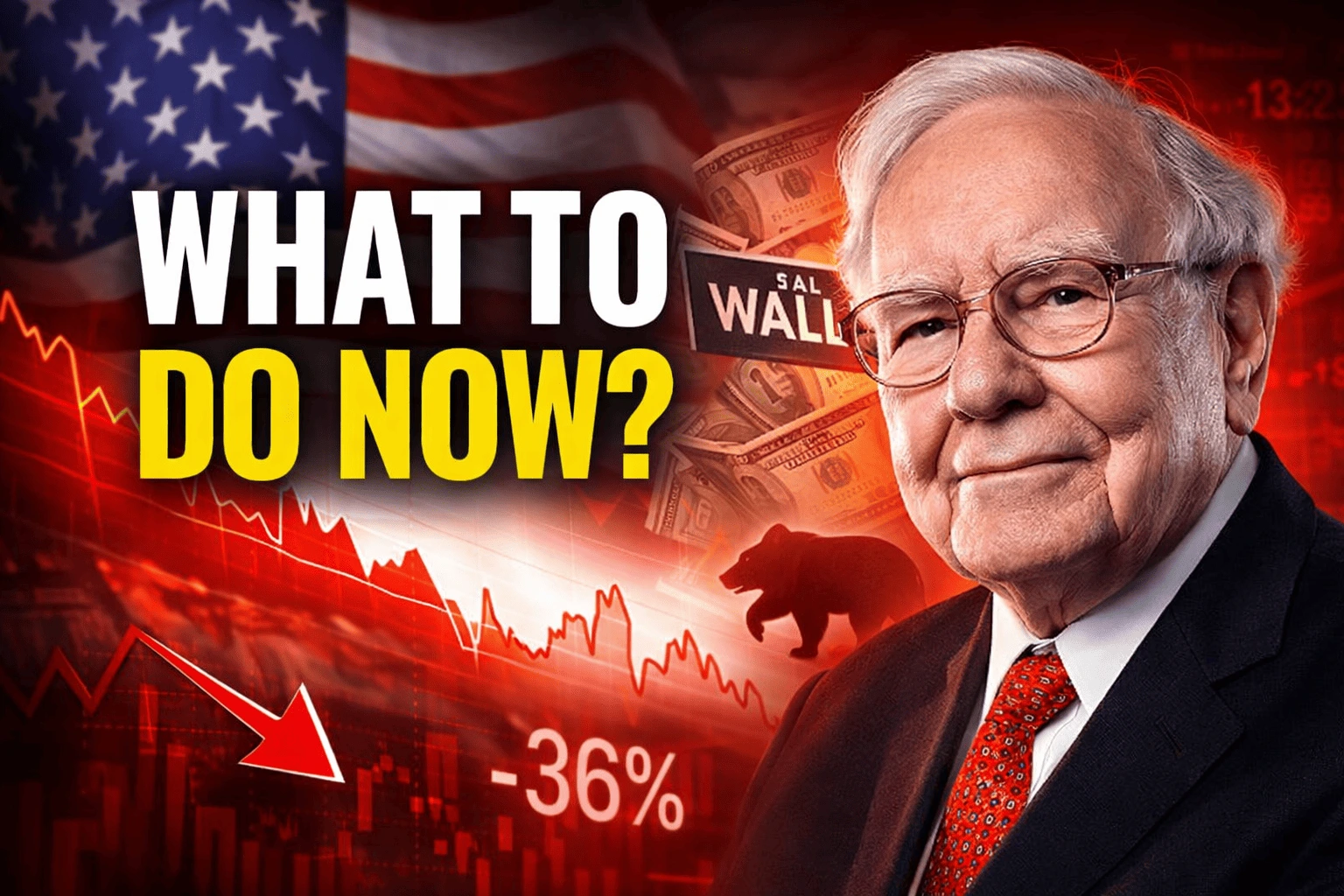
Don’t Wait for the Bottom, this document is prepared strictly for educational and informational purposes. It does not constitute individual financial, investment, or tax advice. The “Senior Financial Research Analyst” persona employed herein is for stylistic and professional delivery; the content should not be interpreted as a solicitation to buy or sell any security. All investing involves a high degree of risk, including the possible loss of principal. Past performance, including the market recoveries of 2023–2025, is not indicative of future results. You are strongly advised to consult with a certified financial planner, a licensed investment advisor, or a qualified tax professional before implementing any strategy discussed in this report.e
Don’t Wait for the Bottom
INTRODUCTION
In the world of high-stakes finance, history rarely repeats itself with precision, but it frequently rhymes with unsettling accuracy. For the disciplined investor, pattern recognition is the difference between generational wealth and permanent capital impairment. We are currently witnessing a sequence of market events that mirrors the 2022 downturn—a year that saw the S&P 500 finish down -18%, leaving retail investors in a state of “analysis paralysis.”
As of late March 2026, the S&P 500 has retreated approximately 4.5% within the first 14th of the year. On a purely linear trajectory, this puts the index on a collision course to replicate that exact -18% annual decline. While the headlines scream of a looming “AI Bubble” and geopolitical instability in the Middle East, the sophisticated analyst sees a different narrative: the “2022 Redux.”
The core problem facing the market today is not the volatility itself, but the retail investor’s tendency to “wait for the bottom.” In 2022, those who moved to cash or hesitated during the dip missed the subsequent three-year “golden era” of 2023, 2024, and 2025, where annual returns surged into the 20% range. The cost of being “out of the market” during the eventual recovery far outweighs the temporary discomfort of a correction.
We are currently in a “gift” period—a rare window where mega-cap valuations are decompressing, providing a secondary entry point into the structural winners of the next decade. This analysis will dissect the macro parallels between 2022 and 2026, evaluate the “AI Bubble” narrative, and provide a systematic framework—the ETF Wealth System—to move from emotional guessing to automated, data-driven execution. The time to build wealth is during the bear markets that occur only a small fraction of the time; 2026 is that time.
Don’t Wait for the Bottom
MACRO ANALYSIS: THE 2022 VS. 2026 PARALLEL
To understand why the 2026 correction is unfolding, we must look at the structural symmetry between the current environment and the 2022 crash. The catalysts are not merely similar; they are functional duplicates.
The Geopolitical Catalyst: Iran as the New Ukraine
In 2022, Russia’s invasion of Ukraine was the “black swan” that fractured global supply chains. In 2026, the conflict in Iran is serving as the primary geopolitical handbrake. Oil prices are booming, which acts as a stealth tax on both the consumer and the corporation. However, a Senior Analyst looks beyond the gas pump.
Modern global logistics are entirely fuel-dependent. The multi-ton shipping vessels, cargo aircraft, and long-haul trucking fleets that move the world’s inventory are seeing their operational overhead skyrocket. When energy prices spike, the “velocity of cost” increases. These expenses are inevitably passed to the consumer, creating a “sticky” inflationary loop. Just as the 2022 energy crisis forced a massive re-evaluation of global growth, the 2026 Iran conflict is forcing a repricing of risk across all equity sectors.
The “Bubble” Narrative and P/E Compression
The 2022 correction was defined by the “Tech Bubble” burst—a period of P/E (Price-to-Earnings) multiple contraction where investors stopped paying for “growth at any price.” In 2026, the narrative has shifted to the “AI Bubble.” Critics argue that the “Magnificent 7” have reached unsustainable valuations.
We are seeing significant tactical pullbacks as a result:
- Meta: Down 9% Year-to-Date (YTD).
- Amazon: Down nearly 9% YTD.
- Microsoft: Down over 18% YTD.
From a research perspective, this is not a fundamental collapse of AI utility, but rather a “valuation reset.” Institutional investors are trimming positions to lock in gains from the 2023–2025 bull run, creating a liquidity vacuum that hits mega-cap tech the hardest.
The Fed’s Institutional Tension: Rates and Policy Shocks
In 2022, the market was shocked by the speed of rate hikes. In 2026, the shock is the “Lack of the Pivot.” Despite the President calling for lower rates since the middle of 2025 and the market pricing in aggressive cuts, Chairman Jerome Powell has maintained a hawkish stance.
The Fed is currently holding rates steady, signaling potentially only one rate cut for the entirety of 2026. This creates immense institutional tension. The Fed’s mandate is price stability, but political pressure for liquidity is mounting. This “higher for longer” environment mimics the 2022 liquidity crunch, where the cost of capital remains high, punishing highly-leveraged growth companies and rewarding cash-rich market leaders.
The Agricultural Crisis: Fertilizer, Ammonia, and the Haber-Bosch Link
A critical data point that the broader market is overlooking is the agricultural bottleneck. The Iran conflict has triggered a 40% year-over-year spike in fertilizer costs for U.S. farmers. This is not just a “commodity swing”; it is a structural threat to the global food supply.
The Middle East is responsible for 15% of all U.S. fertilizer imports. More importantly, the region produces 50% of the global supply of urea and 30% of ammonia. Ammonia and urea are the “building blocks of life” created via the energy-intensive Haber-Bosch process. This process requires massive amounts of natural gas and stable energy prices. With the oil and gas price boom, the cost of creating fertilizer has eclipsed the profit margins of many agricultural producers. This mirrors the 2022 Ukrainian commodity export crisis, suggesting that food inflation will remain a persistent drag on the S&P 500’s earnings per share (EPS).
The 2025 McKinsey Tariff Survey and Supply Chain Restructuring
Further compounding these issues is the structural shift in trade policy. According to a 2025 McKinsey & Company survey, 82% of companies are currently affected by new tariffs. This is not a temporary hurdle but a “rapid, costly restructuring of logistics.”
The survey notes that 39% of these companies are already experiencing increased supplier and material costs. When 82% of the corporate world is forced to relocate manufacturing or find new suppliers simultaneously, profit margins are “decimated.” This leads to the investor sell-offs we are seeing in companies like Apple, which are highly sensitive to shipment delays and production instability.
Don’t Wait for the Bottom
SECTOR DEEP DIVE: THE TECH CORRECTION (CASE STUDY: MICROSOFT)
The decline in Mega-Cap technology is the most significant “gift” of the 2026 correction. Microsoft (MSFT), the vanguard of the AI revolution, serves as our primary case study.
Microsoft has seen a price correction of over 18%. To a novice, this looks like a bubble bursting. To a Senior Analyst, this is Multiple Contraction. The company’s earnings remains robust, but the price investors are willing to pay for those earnings has dropped due to the Fed’s “higher for longer” stance.
Microsoft (MSFT) Analytical Overview
| Metric | Value/Status |
| Price Action | Down 18%+ YTD |
| Market Cap | Mega-Cap / Magnificent 7 Leader |
| Analyst Sentiment | Analytical Buy (Strategic Reset) |
| Next Earnings Date | Expected Late April 2026 (Q3 Fiscal) |
| Relative Strength | Historically oversold relative to 200-day MA |
Analyst Note on AI Disruption: The current drawdown is driven by macro liquidity, not a failure of AI technology. Microsoft remains the backbone of enterprise AI infrastructure. An 18% discount on a company with this much “moat” and recurring revenue is a rare valuation anomaly that mirrors the opportunities found in the 2022 tech trough.
Don’t Wait for the Bottom
CORE INVESTMENT STRATEGY: THE ETF WEALTH SYSTEM
Navigating a “2022 Redux” requires moving away from “guessing the bottom” and toward a “system” of disciplined automation. The “Professor G” ETF Wealth System is designed to eliminate the emotional volatility that leads to “tinkering.”
The system is built on an 8-week live cohort methodology, which is broken down into three distinct phases to ensure long-term solvency and growth.
The Three Phases of the System
- Phase 1: The Investment Policy Statement (IPS): We eliminate “strategy drifting” by creating a written set of rules. Your IPS dictates exactly what you do when the market drops 5%, 10%, or 20%. It is your “financial constitution.”
- Phase 2: Allocation and Selection: We optimize your accounts to ensure maximum tax efficiency. We select high-conviction ETFs that align with your risk tolerance, moving away from “random stock picking” to systematic index exposure.
- Phase 3: Stress Testing: We run your portfolio through historical “crash simulations.” If you know your plan can survive a 2022-style -18% drop or a 40% spike in fertilizer-driven inflation, you are less likely to panic-sell.
The 2026 Recommended ETF List
- QQQM (Nasdaq 100)
- Strategic Advantage: Offers exposure to the top 100 non-financial tech giants at a lower expense ratio than the traditional QQQ.
- Analyst Pro-Tip: Use the current 18% tech pullback to aggressively lower your cost basis in this growth engine.
- VGT (Vanguard Information Technology)
- Strategic Advantage: Pure-play technology exposure.
- Analyst Pro-Tip: Ideal for investors who view the “AI Bubble” as a secular shift rather than a cyclical fad.
- VOO (Vanguard S&P 500)
- Strategic Advantage: Extreme tax efficiency and broad-market stability.
- Analyst Pro-Tip: The “core” of any portfolio. Buying VOO when the index is down 4.5% in the first weeks of the year has historically been a high-probability entry point.
- SCHD (Schwab US Dividend Equity)
- Strategic Advantage: Focuses on companies with strong cash flows and sustainable dividends.
- Analyst Pro-Tip: Use this to hedge against “flat” market years. Dividends provide a “return floor” when growth stocks are stalling.
- VXUS (Vanguard Total International Stock)
- Strategic Advantage: Diversifies away from U.S.-specific tariff and political risks.
- Analyst Pro-Tip: Essential for capturing the 15% Middle East influence and emerging market growth.
- BND (Vanguard Total Bond Market)
- Strategic Advantage: Capital preservation during extreme volatility.
- Analyst Pro-Tip: With the Fed holding rates “higher for longer,” BND allows you to lock in yields that were unavailable for the last decade.
10 MARKET GIANTS DRIVING THE INDEX
The following 10 companies dictate the movement of the S&P 500 and the Nasdaq. Understanding their “Driver” and “Verdict” is essential for monitoring your ETF holdings.
- Microsoft (MSFT)
- The Driver: Enterprise AI and Azure cloud dominance.
- Analyst Verdict: Strong Buy on Dip. The 18% decline represents a significant P/E compression and a prime entry point.
- Apple (AAPL)
- The Driver: Supply chain efficiency and global hardware sales.
- Analyst Verdict: Secular Headwinds. Vulnerable to the 82% of companies reporting tariff issues. Wait for logistics stability.
- NVIDIA (NVDA)
- The Driver: Compute power for the AI expansion.
- Analyst Verdict: Relative Strength Caution. While a leader, it remains overextended. Maintain a “Core Growth” position but avoid chasing at all-time highs.
- Amazon (AMZN)
- The Driver: High sensitivity to fuel costs and consumer discretionary spending.
- Analyst Verdict: Analytical Buy. Currently trading at a discount due to the Iran-driven energy spike.
- Meta (META)
- The Driver: Digital ad revenue and the “AI Bubble” sentiment shift.
- Analyst Verdict: Strong Buy on Dip. Fundamental earnings are decoupling from the “bubble” narrative.
- Alphabet (GOOGL)
- The Driver: Domination of the search-to-AI pipeline.
- Analyst Verdict: Defensive Growth. A lower-volatility play within the tech sector.
- Tesla (TSLA)
- The Driver: Interest rate sensitivity and global supply chain costs.
- Analyst Verdict: Multiple Contraction. Highly volatile; requires a disciplined, small allocation size.
- Broadcom (AVGO)
- The Driver: Semiconductor infrastructure for data centers.
- Analyst Verdict: Core Growth. Benefits from the long-term AI infrastructure build-out regardless of software “bubble” fears.
- Eli Lilly (LLY)
- The Driver: Healthcare innovation and non-cyclical demand.
- Analyst Verdict: Strategic Stability. Provides a hedge against tech-driven volatility.
- JPMorgan Chase (JPM)
- The Driver: “Higher for longer” interest rate environment.
- Analyst Verdict: Institutional Hold. Essential for financial sector exposure as the Fed keeps rates steady.
FAQ SECTION: INVESTOR STRATEGY & MARKET OUTLOOK
Why is 2026 described as a “2022 Redux”? A: The parallels are structural. In 2022, we faced the Ukraine conflict, a tech correction, and a Fed hike shock. In 2026, we face the Iran conflict (which echoes the energy and food price spikes), an “AI Bubble” correction (echoing the tech multiple compression), and a “Lack of Pivot” shock from the Fed. In both cases, the S&P 500 showed a significant YTD drop—4.5% in the first 14th of the year—signaling a potential -18% annual finish.
Don’t Wait for the Bottom
How do “Tax Efficient ETFs” reduce tax drag in a volatile market? A: Unlike mutual funds or active trading, ETFs like VOO and QQQM use an “in-kind” redemption process. This allows the fund to shed shares without triggering capital gains taxes for the shareholders. In a year like 2026, where you may want to rebalance or “tax-loss harvest,” using ETFs prevents your growth from being eroded by the IRS, allowing for more effective compounding during the recovery.
Is the 2026 “AI Bubble” real, or just a market correction? A: Most “Senior Financial Research Analysts” view this as a healthy correction. Unlike the 2000 Dot-com bubble, today’s AI leaders like Microsoft and Meta have massive cash flows and real-world utility. The 18% drop in Microsoft is driven by macro liquidity issues and the Fed’s refusal to cut rates, rather than a failure of the technology itself. This creates an “Analytical Buy” opportunity.
How does the conflict in Iran directly affect my grocery bill and stock portfolio? A: The conflict has triggered a 40% spike in fertilizer costs. The Middle East provides 50% of the world’s urea and 30% of its ammonia, which are the essential ingredients for global agriculture. This energy-intensive process relies on stable gas prices. As fertilizer costs rise, corporate margins for food producers drop, leading to “sticky” inflation that prevents the Fed from cutting rates, which in turn keeps the stock market under pressure.
What is the risk of “waiting for the bottom” to invest? A: The primary risk is missing the “V-shaped” recovery. In 2022, the bottom was reached quickly, but many investors stayed in cash through 2023 because of “false positive” reports. Those who waited missed three consecutive years of 20%+ returns. History shows that the most profitable days in the market often occur immediately following the darkest days. If you are not in the market during the correction, you won’t be there for the recovery.
What are the best long-term investment strategies for 2026? A: The most effective strategy is a systematic, automated framework. Move away from “guessing” and adopt an Investment Policy Statement (IPS). Focus on broad-market ETFs like VOO for the core of your portfolio and use QQQM to capture growth during tech drawdowns. By automating your contributions, you buy more shares when prices are low (like right now) and fewer when they are high.
How do the 2025 McKinsey survey results on tariffs impact the Magnificent 7? A: The survey found that 82% of companies are affected by new tariffs, with 39% seeing higher material costs. For a company like Apple (AAPL), this means “significant shipment delays” and “production instability.” This forces these giants to engage in costly logistics restructuring, which temporarily reduces profit margins and leads to the stock price volatility we are seeing.
Why is the Fed only projecting one rate cut for 2026? A: Chairman Powell is facing “sticky” inflation driven by energy costs and the agricultural crisis. Despite the President’s calls for lower rates, the Fed’s mandate is to prevent an inflationary spiral. By holding rates steady, they are choosing to cool the economy even if it causes a -18% correction in the stock market, mirroring the hawkishness of 2022.
What is the “Professor G” ETF Wealth System’s 8-week cohort? A: It is a live, intensive program designed to move investors from “analysis paralysis” to “disciplined execution.” It involves three phases: building a personal IPS, optimizing allocations for tax efficiency, and stress-testing the plan against market crashes. It is designed to provide “rules of the road” so you can trust your plan for decades, regardless of market volatility.
Does “S&P 500 correction 2026” mean I should sell my stocks? A: Absolutely not. A correction is a “gift” for those who are in the “accumulation phase.” Bull markets occupy the majority of our time, but bear markets and corrections are where you “make your money” by acquiring high-quality assets at a discount. The goal is to have a system that keeps you buying when everyone else is selling.
Don’t Wait for the Bottom
STRONG CONCLUSION: THE WEALTH OF DISCIPLINE
The current market environment of 2026 is a test of temperament, not intelligence. History teaches us that the vast majority of market time is spent in a “bull” state, where everyone feels like a genius. However, the true “wealth of discipline” is forged during the brief, painful periods of correction. These moments—like the -18% finish in 2022 and the current trajectory of 2026—represent a small percentage of the calendar, yet they offer the highest potential for long-term compounding.
Don’t Wait for the Bottom
Successful investing is not about “waiting for the bottom” or chasing the latest viral advice. It is about building a framework that removes the human element of fear. To succeed in this “2022 Redux,” you must commit to a systematic approach:
- Implement a Written Investment Policy Statement (IPS): You must have “rules of the road.” When Microsoft drops 18% or the Middle East conflict causes a 40% spike in fertilizer costs, your IPS tells you exactly how to react. Without it, you are merely a “passenger” to your own emotions.
- Leverage the Power of Compounding during Downturns: The massive gains of 2023–2025 were only captured by those who had the discipline to hold (and buy) during the 2022 crash. The “gift” of 2026 is the low cost-basis you are building for the recovery of 2027 and beyond.
- Eliminate “Tinkering” Through Automation: Investors who constantly adjust their strategy during a correction invariably underperform the market. By using the “ETF Wealth System,” you move from a state of “guessing” to a state of “automation.”
- Stress-Test Your Plan Against Reality: The 8-week cohort philosophy centers on preparing you for the worst-case scenario. When you have a plan that has been “stress-tested” against 2022-style volatility and supply chain shocks, you no longer fear the headlines—you see them as signals for opportunity.
The opportunities present in late March 2026 are a rare “gift” that may not return for another decade. By moving from “analysis paralysis” to a system of disciplined automation, you ensure that you are one of the few who actually pounces on opportunity when it is right in front of your face. Stop waiting for a bottom that you will only recognize in hindsight. Start building a plan you can trust for the next thirty years.
Don’t Wait for the Bottom
FINAL DISCLAIMER
All investing involves the risk of loss, including the potential loss of principal. Past performance is not a guarantee of future results. The market can remain volatile or irrational for longer than an individual can remain solvent. This analysis is based on current market data and historical parallels that may not hold true in the future. Always conduct your own thorough due diligence and consult with a licensed financial professional to ensure your investment strategy aligns with your specific risk tolerance, time horizon, and financial objectives.
Don’t Wait for the Bottom